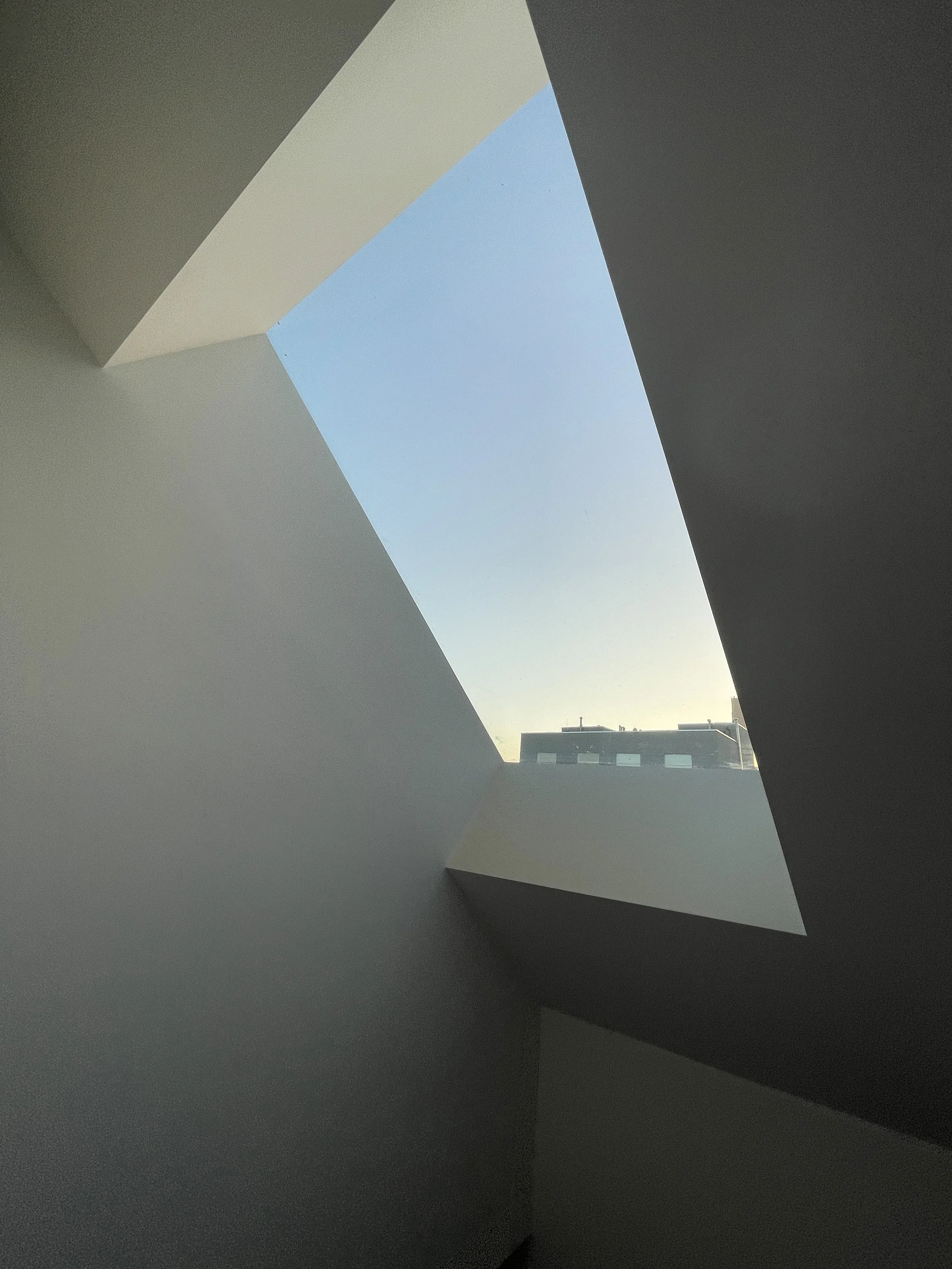
Contrary to common practice, we don’t care about traditional style labels like “Modern,” “Stark,” “Traditional,” or “Ornate.” Whether it’s a renovation or new construction, at SpArC we aim to uncover and express the contextual layers of a space. The history of a place and its spatial context are integral to the process. We think about how one approaches a building, moves through it, finds daylight, and views the surroundings all as a sequence of experiences. This narrative transforms the everyday into something explicitly perceivable. We value the “ordinary” deeply, because living in a building is an everyday affair.
Good architecture reveals beauty in the mundane, without unnecessary embellishment. That said, we also embrace experimentation. Unexpected solutions often elevate a building’s spatial quality. Within this framework, we can work with any style or preference our clients bring. We hope to be inspired by what you like and aim to be the best translator of that vision into your new space. We are always extremely respectful of the constraints you put in place. We enjoy finding the smartest solutions to your spatial needs.
Please talk to us about how we can do more within your budgetary constraints. Ask us about the difference between gut renovations and approaches that retain more of the existing structure; sometimes strategic interventions can make a world of difference without breaking the bank. Finally, we care deeply about buildings being a positive contributor to communities and the environment. We oppose the idea that thoughtful design must come with added cost. A clever, consciously grounded approach can make the most of your project while respecting both your parameters and those set by the wider world.
Sparc was started by Hans Maarten Wikkerink after 15 years of experience in the construction industry. He is a registered architect in New York State and in the Netherlands and a member of the American Institute of Architects. His Master of Science in Architecture came from the prestigious Academy of Architecture in Amsterdam. Besides architecture, he studied Art and Architectural History at the University of Amsterdam.
In the past 20 years, Hans Maarten has led several multidisciplinary teams to manage often complex adaptive reuse projects, from converting school buildings and office buildings into cultural centers to renovating precious landmarked buildings. Working in New York City’s challenging context in the past decade has made him an expert in the city’s building code and zoning resolution, proven by many plan approvals in different leadership roles.
Hans Maarten has won several awards like the ‘Geurt Bevink Bokaal’ award from the city of Amsterdam for best adaptive reuse project. He was a nominee of the prestigious Dutch Archiprix, runner-up in the international Unbuild Housing Awards, and received an honorable mention in the New York City Affordable Housing Challenge.
Before becoming an architect, Hans Maarten founded Studio/K, a multi-venue theater and cinema complex in Amsterdam, which has been a staple venue in Amsterdam’s arthouse movie scene ever since.
“I enjoy building spaces. As a child, I built small structures in the yard. In my professional life, this slowly evolved into a career in the field of architecture. I can't help but fantasize constantly about the most ideal way of living for people. This happens to me when I visit someone’s home, but also when I walk around in the city.
As a professional, I have developed a delicate sense of atmosphere: atmosphere as the result of a pleasant social environment, atmosphere as the result of good spatial organization and design, and atmosphere as the result of beautiful materials, composition, and imagery. I love the everyday and ordinary and I am always looking for the secret behind why the details of buildings work or not.
I am interested in the full spectrum of the architecture profession, from regulations and policies to the nuts and bolts of how something is made. As far as I'm concerned, excellence lies in the details.
Often rightfully portrayed as one of the main drivers of the current climate problems, I believe the built environment can and should play a crucial role in reversing the course and becoming a part of the solution. Great and mindful design can do this.
I feel most at home where innovation needs to be translated into everyday use. My work celebrates the mundane and ordinary and tries to uncover the hidden beauty of everyday life”